Key takeaways
- Check that exported records can be opened before giving an irreversible deletion instruction.
- Use the event named in each clause to start its clock. Here the backup clock begins after active deletion.
- Assign your company’s downloaded output to a records owner who controls its disposition.
What evidence should procurement collect when a vendor says it has deleted our AI workspace?
Bright Fen ends a fictional five-week AI pilot on August 15. Its administrator removes twelve uploaded agreements and sends Procurement a screenshot of an empty folder. The team also has twelve summaries, shared projects and one analyst’s downloaded output. Which records can the business still retrieve? Which copies does the vendor still hold?
The pilot schedule starts one clock when the vendor receives a written instruction and a second clock when production deletion is complete. An August 15 acknowledgement and an August 18 production confirmation belong on different rows of the exit register. Neither establishes when the last backup copy rotates out.
Inventory the original, the summary and the copies
Follow a single pilot agreement into every place it was used: uploaded file, saved summary, search index, support ticket and export. Ask which categories the vendor deletes on request and which age out on a schedule. Assign internally downloaded copies to your records owner; the vendor can confirm only the systems it controls.
Which closeout items can Bright Fen verify?
| Copy or retention layer | Retention evidence | Decision or next action |
|---|---|---|
| Customer export | Procurement compares the twelve source files and expected summaries with the export. | Business owner accepts the export before deletion. |
| Active workspace | Vendor confirmation names the workspace and the categories removed on August 18. | Close the production item after the reviewer checks the scope. |
| Residual backups | Vendor identifies the rotation period and evidence available after expiry. | Leave the backup item with an owner until that evidence arrives. |
Verify the return before authorizing removal
Compare the export manifest with the twelve source agreements and expected outputs. Ask the business owner to open a sample and confirm the export is usable. Preserve any records counsel has placed on hold. Send the deletion instruction through the contractual channel and retain the acknowledgement that starts the applicable clock.
Separate completed deletion from open exceptions
Compare the vendor’s confirmation with the workspace identifier and categories in the original inventory. Record residual backups, their expected expiry and any hold. Ask what happens to deleted records if a backup is restored. Set a follow-up for the evidence the vendor agreed to provide; assign someone with authority to accept it.
Assign evidence collection after signature
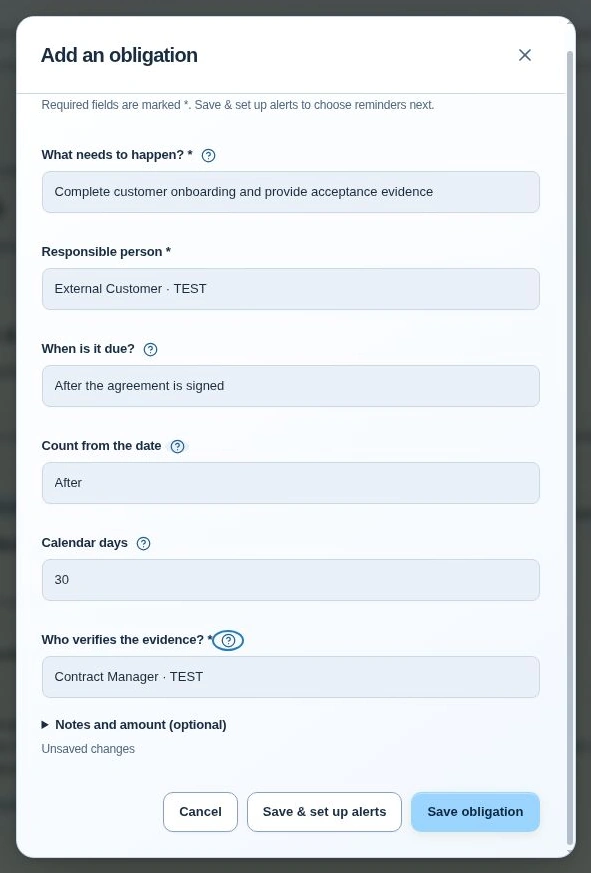
Create separate exit obligations for the active workspace and residual backups in the contract management system. Give the verifier the signed deletion wording, the August 18 confirmation and the categories it actually covers. An empty project view is useful supporting evidence for the administrator’s step.
Use ContraxAware’s security information as a starting point when requesting a retention schedule for the edition you are evaluating.
For background, see OpenAI Data Processing Addendum, an example of vendor-specific terms.
For the full workflow, read how to track evidence until a post-signature obligation closes.
 View full-size screenshot
AI service exit and deletion register
Inventory every copy. Enter the trigger and evidence required for each disposition; keep residual items open until independently verified.
Preview a completed worksheet row
- Data copy
- Twelve source agreements
- Inventory evidence
- Pilot inventory and admin file list
- Trigger
- Business owner requests verified export
- Fictional disposition
- Return first; compare twelve files against inventory
- Accountable owner
- Procurement lead
- Closure evidence
- Checked export manifest and receipt
- Status
- Export accepted
Frequently asked questions
Can a contract require a deletion certificate?
A buyer can request one and agree its form, signer, scope and timing. A useful certificate identifies outstanding exceptions so the reviewer can see what remains. Ask about the evidence the vendor can reasonably produce before promising a specific certificate to your own customer.
Where should a legal hold go?
Ask counsel to confirm how a hold or statutory requirement affects each category and release date. Record the exception and access restriction in the closeout file. A sample deletion schedule should never trigger destruction of records counsel has instructed the team to preserve.
What is the right starting date for an exit deadline?
Read the specific trigger. A clock can run from termination, acknowledgement of instructions or a separate event. Record the supporting message or document and who verified the date before sending a reminder.
How should we handle a vendor that refuses to certify deletion?
Find out what evidence it does provide. A dated confirmation, scope description or independent assurance may support part of the buyer’s requirement. Escalate any remaining mismatch to the accountable owner before agreeing to a stricter downstream promise.