Key takeaways
- The example has ten calendar days from receipt to object. Recalculate from your own signed wording.
- Trace the new provider to the features and customers that actually use it.
- Track downstream customer notices individually, including delivery evidence and the owner of the response.
What should the contract manager do when a new AI model provider appears on the subprocessor list?
A fictional software vendor emails Procurement on June 3 about a speech-to-text provider it plans to add July 1. Support uses call summaries. Legal searches written agreements. Before alerting every customer, Procurement asks the vendor whether the new provider receives call audio, document text or both.
The signed addendum gives the buyer ten calendar days after receipt to object and makes June 4 day one. That puts the deadline on June 13 in this example. Commercial counsel sets June 10 as the internal decision target and checks who can send the response and which channel the agreement recognizes.
Identify which feature sends which records
Ask for a dated diagram showing who receives audio, transcripts and document text. Which settings prevent transmission, when do they take effect, and are existing recordings included? Route the actual call-summary data flow to Privacy. Keep the vendor’s explanation for any document-search users you exclude from the review.
Which decisions follow the notice?
| Notice requirement | Notice and scope | Decision or next action |
|---|---|---|
| Affected services | Vendor diagram shows audio and transcripts in scope; document search uses a separate path. | Route the audio path to Privacy for assessment and record the source. |
| Objection clock | Fictional DPA uses June 3 receipt and a ten-calendar-day period. | Set an internal decision on June 10 and document the June 13 outer date. |
| Commercial outcome | Vendor proposes a feature-level opt-out and gives the setting owner. | Test it with sample data and retain confirmation of the customer decision. |
Read what happens after an objection
Locate permitted grounds, required content, delivery method and any time the vendor has to offer an alternative. Ask whether an unresolved objection affects the whole subscription, a single service or another remedy. Record the quoted provision and send any uncertain interpretation to counsel before communicating a position.
Check your promises to affected customers
For each affected customer, read its signed processing terms. Record the trigger, contact, deadline and required evidence of any downstream notice. A vendor notice arriving at Procurement and your company delivering a notice to its customer are separate events. Track both before closing the change.
Keep the vendor notice with the review decision
In the contract management system, attach the notice and the agreed response procedure to the vendor record. Create a dated reminder for the internal decision. After the authorized person sends an objection, retain the notice, recipient and delivery evidence with the outcome.
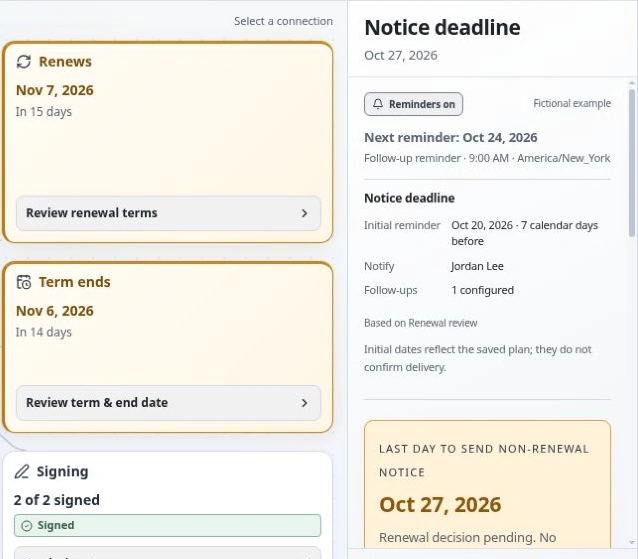
Use contract dates and renewal reminders to plan the objection review, and consult ContraxAware’s security information when preparing questions about the proposed provider.
For background, see OpenAI Data Processing Addendum, an example of vendor-specific terms.
For the full workflow, read how to distinguish a notice deadline from its reminder.
 View full-size screenshot
AI subprocessor notice decision log
Start from receipt and the executed addendum. Enter internal targets separately from contractual deadlines and retain evidence of each communication.
Preview a completed worksheet row
- Question or action
- Which users send data to the new provider?
- Contract or technical evidence
- Vendor diagram for speech transcription and written feature scope
- Clock or date
- Notice received June 3
- Decision owner
- Privacy lead
- Disposition
- Review audio users; separate document-only teams
- Record to retain
- Dated data-flow diagram and reviewer notes
Frequently asked questions
Is a new subprocessor automatically grounds to terminate?
Read the negotiated remedy, including any conditions or time allowed to offer an alternative. An objection can start a conversation. It does not, by itself, establish what either party can terminate or what happens to fees.
What if nobody subscribed to vendor notices?
Record who owns the subscription and add a shared mailbox where available. Inventory past notices since the last review. Discuss any missed deadlines with the contract owner and counsel before treating an old change as accepted or resolved.
Which team should own the vendor response?
Name one person who can coordinate Procurement, Security and Privacy, and identify who has authority to issue a contractual notice. A shared email inbox gives coverage but cannot make the decision by itself.
Does an updated list cover downstream customer notices?
Check the clause in each affected customer agreement. It may specify an address, method, evidence or trigger that differs from the vendor’s process. Build a separate action for each required communication.